
Yancoal’s Kestrel acquisition could reshape its long-term growth story, but the market is not celebrating yet. While the deal adds a major metallurgical coal asset with a long mine life, investors are weighing the benefits against higher debt, regulatory approvals and uncertainty around coal prices.
Yancoal (ASX:YAL) Falls 2.35% After Signing $2.4bn Kestrel Deal: Buy the Dip or Wait?

After market close on Tuesday, 14 April 2026, Yancoal Australia (ASX:YAL) announced a binding agreement to acquire Kestrel Coal Group from EMR Capital and Adaro Capital for up to US$2.4 billion (around A$3.4 billion). It is one of the largest Australian coal deals in recent memory. The market's verdict came swiftly the next morning: shares opened weaker and finished Wednesday's session down 2.35% at A$7.06, from a previous close of A$7.23. So why did investors react cautiously to a deal that meaningfully expands Yancoal's footprint? Let's break it down.
What Yancoal Is Actually Getting for $2.4bn
The structure matters here. Yancoal is acquiring 100% of Kestrel Coal Group, which in turn holds an 80% interest in the Kestrel Joint Venture. The remaining 20% will continue to be held by Japan's Mitsui & Co, which stays on as joint venture partner.
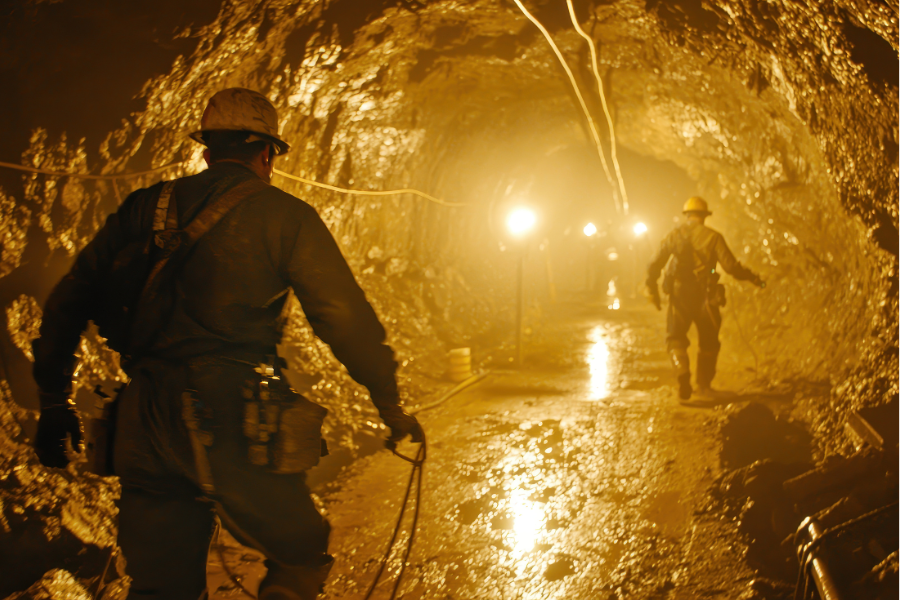
The asset itself is no ordinary mine. Kestrel is Australia's largest producing underground coal mine, located in Queensland's Bowen Basin, with saleable production of 5.9 million tonnes in 2025. It holds 164 million tonnes of marketable reserves and an expected mine life of around 25 years.
The consideration is structured as US$1.85 billion upfront, plus up to US$550 million in contingent payments over five years tied to coking coal prices. Funding comes from existing cash and a US$1.2 billion, five-year syndicated acquisition loan facility.
Strategically, Kestrel sits close to Yancoal's existing Middlemount joint venture and Yarrabee operation, opening the door to operational synergies. More importantly, the deal lifts Yancoal's metallurgical coal share to 22% on a pro-forma basis. That is a meaningful pivot from thermal coal towards premium steelmaking coal sold to Japanese, Korean, Indian and South-east Asian buyers.

Why the Market Sold Off on Big News
Three real concerns appear to be driving the cautious reaction.
Debt and funding pressure. Taking on a US$1.2 billion acquisition loan is a notable shift for a company that has historically prided itself on a strong, low-debt balance sheet. Some of the contingent payments will also need to be funded from future cash flows.
Coal sector sentiment. Even with healthy steelmaking coal demand, ESG pressures and uncertainty around long-term coal prices weigh on investor appetite for fossil fuel expansion.
Ownership and approval optics. Yancoal is controlled by China's Yankuang Energy. A large, Chinese-controlled coal acquisition adds regulatory complexity. The deal still requires clearances from the ACCC, FIRB, and several Chinese regulators, with completion targeted for late Q3 2026.
In short, the market is not questioning Kestrel's quality. It is questioning the timing, the leverage, and the path to closing.
Buy the Dip or Wait? The Investor's Verdict
Our view is that the selloff looks understandable but likely overdone relative to what Yancoal is securing. Kestrel is a genuine tier-one asset with decades of production ahead, and the shift toward premium metallurgical coal makes strategic sense for a long-term portfolio.
That said, this is not a deal that pays off immediately. Completion is months away, and meaningful earnings contribution may not arrive until well into 2027.
Investors who may find the dip attractive: those comfortable with coal exposure and a 12 to 24-month horizon, who view metallurgical coal as structurally supported by Asian steelmaking demand.
Investors who may prefer to wait: more conservative or income-focused holders, and anyone wanting to see the regulatory path cleared and debt servicing demonstrated before committing capital.
The Bigger Picture
The Kestrel deal is a defining moment for Yancoal. It reshapes the commodity mix, expands scale, and will test management's discipline on debt. Whether the market's caution proves justified will depend on coal price stability over the next 18 months, and on execution at Kestrel itself.
For deeper analysis of Australian mining and resources producers, including detailed cost curve and production profile coverage, ASR's Resources Portfolio provides ongoing research on ASX coal and commodity names. Investors new to the sector can also download our free Top-3 Stocks & Market Outlook Report for current ASX opportunities and market context.



Our friendly team is here to help.
If you have any questions or feedback about our service, please feel free to contact us.



© Australian Stock Report Pty Ltd. All rights reserved